
The rooftop as a new frontier for wellbeing: rethinking shared spaces through technological innovation
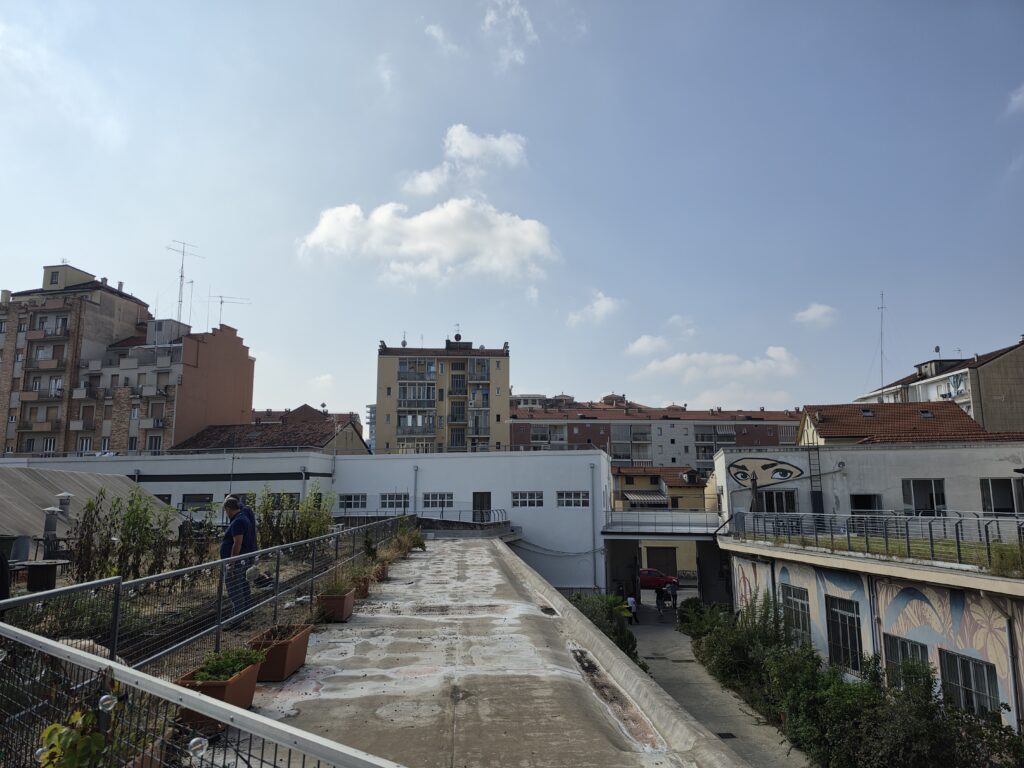
What if the most underused space in your building were also the one with the greatest potential to improve the wellbeing of the people who live and work there? With increasingly ambitious European regulations, new design technologies and growing awareness of the impact shared spaces can have on mental wellbeing, rooftops are becoming a testing ground for healthier and more social ways of living in cities. In this article, we explore why — and how a European project such as aRTes is turning this potential into real solutions. We spend more than 80% of our time indoors. The built environment — from buildings and urban layouts to green areas and shared spaces — influences our wellbeing, daily habits and social relationships. Yet residential and office buildings still have one largely underused surface: the rooftop. A space that can go far beyond its technical function and accommodate multiple uses, combining greenery, energy generation and places for social interaction. What the research tells us: greenery, social interaction and third places Research on rooftop gardening associates accessible green roofs with benefits for physical and emotional wellbeing, a greater sense of belonging and stronger social relationships, with particularly interesting results for more vulnerable groups. Greenery, however, is only part of the picture. There are also so-called third places: informal spaces outside the home and workplace where people can spend time, meet and take part in shared activities. Common areas, shaded spaces and equipped zones can encourage interaction and social cohesion, particularly when their design supports accessibility, visibility and a sense of safety. The quality of the greenery matters too. Studies suggest that even brief visual exposure to a vegetated space can help restore attention and improve cognitive performance. Benefits also increase in relation to biodiversity and the perceived quality of the environment. It is therefore not simply a matter of adding vegetation, but of designing spaces that are pleasant, accessible and genuinely usable. Renewable energy as the third pillar Photovoltaics complete the picture, turning the rooftop into an energy hub as well as a social space. Solar installations can generate clean energy, reduce shared building costs and, when integrated into collective energy schemes, contribute to Renewable Energy Communities. Integration is the key: greenery, social spaces and solar panels do not necessarily have to compete for the same surface. When designed together, they can complement and reinforce one another, generating environmental, social and economic value at the same time. A favourable regulatory framework The regulatory landscape is also creating new opportunities. At European level, the EPBD, EED, UWWTD and the new Nature Restoration Regulation are giving greater strategic importance to green roofs and rooftop solar, while the REPowerEU framework is accelerating the deployment of solar energy on buildings, including requirements affecting new residential buildings from 2029. In Italy, incentives and mechanisms supporting energy efficiency, renewable energy and Renewable Energy Communities are helping create the conditions for integrated interventions combining greenery, urban gardening, shared spaces and photovoltaics. aRTes: bringing together space, energy and social interaction If scientific evidence helps identify what is needed — shared spaces, clean energy and opportunities for social interaction — the European aRTes project (Active RoofTops South Europe) is developing the tools to make it possible. Funded within the Driving Urban Transitions Partnership and co-funded by the European Commission, aRTes aims to overcome some of the barriers that have so far limited rooftop transformation: fragmented regulations, technical complexity, management costs and governance challenges in multi-family residential buildings. The project has developed a portfolio of modular, prefabricated physical solutions designed to adapt to different building types and Southern European climates. These include photovoltaic pergolas, safety parapets integrated with solar panels, and a modular raised flooring system that can interchangeably accommodate urban gardens, green and blue roofs, walkable surfaces or additional photovoltaic panels. This last module builds on the project’s gardening concept. Designed to adapt seasonally to users’ needs, it incorporates water retention functions and has achieved rainwater retention rates of up to 62% at the pilot sites. The results demonstrate how a shared rooftop garden can coexist with energy generation and areas designed for social interaction on the same roof. Data collected across the pilot sites also provide an indication of the solutions’ energy potential. The photovoltaic pergola generates an average of 230 kWh/m² per year and, on a typical 52 m² rooftop, can produce more than 10,200 kWh annually — equivalent to 15% of the building’s total electricity demand. The photovoltaic parapet also contributes to energy generation, with an average output of 85 kWh per linear metre: 44 metres are sufficient to cover the average electricity consumption of two households. Life Cycle Assessment (LCA) results further demonstrate the environmental potential of these solutions. In Madrid, over a 50-year period, the photovoltaic pergola can avoid approximately 1,424 kg CO₂-eq per m², compared with an embodied footprint of 434 kg CO₂-eq/m² associated with its construction. The balance is even more favourable in other cities within the consortium, from Turin to Thessaloniki. The project also brings digital tools into the equation, including platforms for collaborative design, systems for monitoring safe use and models for assessing the suitability of rooftops as last-mile logistics nodes for drones. As a result, the concept of the “multifunctional rooftop” extends far beyond the combination of greenery and photovoltaics, transforming the roof into an infrastructure for energy, services and social interaction. The Turin case: digitalisation and smarter access to regulations Within the consortium, R2M Solution has worked on the Turin pilot, contributing two innovations that are particularly relevant for professionals working in design and technical consultancy. The first is the complete digitalisation of the rooftop at Fonderie Ozanam through a 3D scan using Matterport technology, completed in January 2026. The result is an online, navigable digital twin integrating real-time sensor data and allowing technical constraints and potential intervention opportunities to be identified in advance. It is a valuable tool both during the design phase and when communicating proposals to building owners and other stakeholders. The second innovation is the GenAI
How Self-Sufficient Can a Community Be?

In recent years, islands have become some of the most interesting places to observe the evolution of Europe’s energy transition. At first, this might seem like an unusual choice: these are territories with relatively small populations and contexts that differ significantly from large urban areas. Yet it is precisely their scale and characteristics that make them particularly relevant. Why Europe is looking at islands In recent years, islands have become some of the most interesting places to observe the evolution of Europe’s energy transition. At first, this might seem like an unusual choice: these are territories with relatively small populations and contexts that differ significantly from large urban areas. Yet it is precisely their scale and characteristics that make them particularly relevant. On an island, every resource takes on a different value. Energy must be produced, distributed and managed within systems that are often less interconnected than those on the mainland. Water requires particular attention, especially where natural resources are limited, while mobility depends on connections that cannot always offer the same flexibility as on the continent. Another factor shared by many island communities is seasonality. During the summer months, the arrival of thousands of visitors can rapidly increase demand for energy, water and services, putting pressure on infrastructure designed for much smaller communities. For these reasons, islands provide a particularly interesting testing ground. The challenges that become more visible in these contexts – from resource management and energy dependence to the impacts of climate change – are the same challenges that many other European territories will increasingly have to address in the coming years. One project, three territories, one common goal This is the context behind ICONIC, a Horizon Europe-funded project bringing together partners from different countries to develop strategies that can make rural and island communities more resilient, sustainable and less dependent on external resources. The goal, however, is not to make these territories completely self-sufficient. Rather, it is to help them make better use of the resources available locally, integrating renewable energy generation, energy storage, energy communities, water management, sustainable mobility and digital tools into a single long-term vision. To test this approach, the project is working across three very different case studies. On Inis Mór, in Ireland, the focus is on a community strongly shaped by its geographical isolation and the particular climatic conditions of the Atlantic. On La Graciosa, in the Canary Islands, the main challenge is the integrated management of energy and water, combining renewable energy sources, desalination systems and digital technologies to reduce dependence on external supplies. The Italian case study is Berchidda, in northern Sardinia, a community that has been developing initiatives focused on sustainability and energy innovation for several years. From strategy to action: the Berchidda case In Berchidda, ICONIC is not simply introducing new technologies. It is working to develop a strategy that brings together existing local resources and identifies a realistic pathway towards greater energy independence. This is where R2M Solution’s contribution comes into play. Within the project, R2M Solution supports the Municipality of Berchidda in developing decarbonisation scenarios tailored to the characteristics of the territory. This means analysing different possible pathways for the evolution of the local energy system, assessing their environmental, technical and economic impacts, and defining concrete strategies to progressively reduce emissions while keeping the feasibility of each intervention firmly in view. Alongside this work, R2M Solution supports the local administration in defining an action plan that translates climate objectives into measures that can actually be implemented. This requires engaging local stakeholders, assessing priorities and developing an integrated vision capable of bringing together energy, environmental and governance considerations. Planning the transition, not just implementing it This contribution goes beyond the technical dimension. An effective energy transition does not depend solely on the availability of innovative technologies. It also requires the ability to build shared strategies, identify the most effective investments and support local administrations in the decisions they will need to make over the coming years.
R2M Solution Joins Milan’s Alleanza Aria e Clima: European Expertise Supporting the City

Milan is taking a decisive step in its climate strategy: turning planning into concrete action. At the center of this effort is the Air and Climate Plan, the framework through which the Municipality of Milan has defined objectives and timelines to improve air quality, reduce emissions, and strengthen urban resilience. This ambitious vision is driven by collaboration among institutions, companies, and citizens. The operational backbone of this strategy is the Air and Climate Alliance, a structured collaboration involving businesses across the region. Among the organizations joining the initiative is R2M Solution, bringing expertise developed through years of work on European innovation and sustainability projects. The first 2026 plenary: Milan strengthens the air and climate alliance On February 13, at Palazzo Marino, the Air and Climate Alliance officially launched a new phase of its journey. The launch event and first plenary meeting of 2026 confirmed the central role of cooperation between the public administration and businesses in implementing the Air and Climate Plan. Today, the Alliance includes 83 companies, ranging from large corporations to SMEs and micro-enterprises, highlighting the growing engagement of Milan’s economic ecosystem. This growth is particularly significant considering that only 25 organizations participated in 2025, demonstrating the rapid expansion and increasing relevance of the initiative. The meeting opened with remarks from Elena Grandi, Milan’s Councillor for Environment and Green Areas, who emphasized the importance of shared responsibility in addressing ecological transition challenges. Giuseppina Sordi, Director of the Energy and Climate Area, then presented the evolution of the Alliance as a co-design platform between public and private stakeholders, capable of turning strategic vision into practical action. The initiative is built on shared values — inclusiveness, responsibility, collaboration, participation, and knowledge sharing — fostering both individual and collective growth while strengthening the city’s ability to face contemporary environmental challenges. The Air and Climate Plan: origins and objectives The Air and Climate Plan was developed in response to the climate emergency declared by the City Council in 2019 and is structured around three main pillars: air quality, mitigation, and adaptation. Its objectives are ambitious yet clearly defined: significantly reducing emissions by 2030, achieving carbon neutrality by 2050, and progressively aligning with the World Health Organization’s air quality guidelines. The Plan provides a strategic framework that translates long-term vision into measurable and concrete actions. However, no local administration can act alone. Cities account for a significant share of emissions, but many of the tools required to reduce them are distributed among different stakeholders. This awareness led to the creation of the Alliance: an operational space where public and private actors collaborate on verifiable actions with a shared 2030 horizon. Technical coordination is managed by AMAT, while participating companies are expected to commit directly through initiatives capable of generating tangible impact. R2M Solution’s role: innovation and expertise for the energy transition R2M Solution’s contribution focuses on specific urban areas through an integrated approach combining analysis, simulation, and design. The goal is not to introduce entirely new methodologies, but to apply already proven tools — including digital twins, energy simulations, and Nature-Based Solutions — to assess how interventions on buildings and public spaces can concretely improve emissions performance and air quality. A key aspect of this work is scaling from individual projects to the city level, making the effects of integrated renovation visible and measurable in real urban contexts. Through this approach, R2M Solution supports data-driven strategic decisions and promotes sustainable, replicable solutions aligned with both European objectives and Milan’s Air and Climate Plan. From Bergamo’s Energy Desk to Milan: supporting the Re³ Building Project R2M Solution is also contributing to the development and strengthening of the Energy Desk initiative by leveraging expertise gained at both national and European level. The company’s involvement is part of Project 5 – Re³ Building (Refresh – Rethink – Respond), an initiative promoting collaboration between public and private stakeholders to support the energy renovation of existing buildings. The project engages companies from the construction and financial sectors in a stakeholder engagement process aimed at developing services for the Energy OSS (One-Stop Shop), providing technical, administrative, and financial guidance. Within this framework, R2M Solution brings experience gained through the Energy Desk of the Municipality of Bergamo, where it supported citizens and condominium associations in energy efficiency renovation processes while contributing to the development and consolidation of the service. The main objective is to accelerate the renovation of the residential building stock, which still significantly lags behind European decarbonization targets. At the same time, R2M Solution is working on business models capable of ensuring the long-term financial sustainability and continuity of the Energy Desk service.